
This concise history of Bristol explores how the city evolved from a strategic river crossing into a global maritime powerhouse and modern tech hub. By linking its geography to its industrial ambition, we can see how the “Place by the Bridge” shaped the world. From here you can link to explore certain aspects of Bristol’s history more deeply.
Early Beginnings: The Roman Foundation
While Bristol as a named entity did not exist during the Roman era, the foundations of trade and infrastructure were laid during this period. The Romans brought sophisticated ideas regarding law, civil engineering, and ways of organisation (people, things and processes) that would eventually support the region’s growth.
Roman Infrastructure And Abonae
The Romans recognized the strategic value of the local waterways (and relative ease of using them compared to making roads), establishing the port of Abonae (modern-day Sea Mills) at the junction of the rivers Avon and Trym between the 1st and 4th centuries. Although no major standing structures remain, it is a protected Scheduled Monument. Significant artifacts from this era, including a Roman gravestone from Sea Mills, are now housed at the M Shed museum.
Rural Roman Life
Evidence of Roman agricultural and domestic life exists throughout the surrounding region. The Kings Weston Roman Villa, discovered in 1947, offers a glimpse into a Roman country house. Visitors can still view these ruins, which represent some of the earliest permanent brick-and-mortar structures in the Bristol area. Other buried sites in Emersons Green and Winterbourne suggest a highly organized agricultural hinterland that fed the early port.
The Anglo-Saxons: The Birth of “Brycgstow”
Bristol is fundamentally an Anglo-Saxon creation, with its identity rooted in its unique geography. The name evolved from the Old English “Brycgstow,” meaning “The Place by the Bridge”. By the 11th century, it was known as Brightstowe, and a local linguistic quirk—adding an “L” to words ending in vowels—eventually transformed it into Bristol.
- Brycg: Bridge
- Stow: Place or meeting point
The Strategic River Crossing
The Saxons chose the confluence of the River Avon and the River Frome for its logistical advantages. At a time when roads were difficult to navigate, rivers provided the primary highways for trade. The River Avon led toward Wales and Ireland, while The River Frome connected the settlement to the fertile farmlands of Gloucestershire. Saxon Lords capitalized on this “meeting point” by taxing boats passing through the area.
The Tidal Elevator And Early Trade
A defining feature of Bristol is its status as having the second-highest tidal range in the world. This massive tide acted as a natural elevator, allowing large ships to be brought miles inland into the heart of the settlement. This accessibility facilitated trade with Viking Ireland and Scandinavia. However, this early prosperity had a dark side: Saxon Bristol served as a hub for exporting English captives to Viking-controlled Dublin, a practice only ended in the late 11th century through the preaching of Bishop Wulfstan. England’s first slave trade enslaved it’s own people by interlopers. Early trade with Irish Norse Dublin as well as geography helped keep Bristol untouched by Viking raids.
Bristol Was A Commercial Hub As Aarly As The 11th Centuary
Silver Pennies from the reign of Aethelred II (Aethelred the Unready), dating to approximately 1009–1010 have shown Bristol was seen as a centre of commerce. Anglo-Saxon law (specifically the laws of King Athelstan) state coins could only be struck in a “port” or market town. The existence of these coins proves that by 1010, Bristol was already an established, legally recognized trading center. Bristol continued as a place to produce minted coins for centuries.
The Normans: Castles, Churches, and Capital
The Norman Conquest transformed Bristol into a fortified military and commercial gateway. The Normans formalized the city’s layout, much of which is still visible today in the “Old City.”
The Physical Legacy Of Norman Bristol
The Normans built Bristol Castle, a massive stone fortress that once dominated the area now known as Castle Park. They also established the city’s primary axis at the High Cross, where the four original streets met: Wine, Corn, Broad, and High Street.
- Wine Street: Named for the lucrative Norman trade with Gascony (Bordeaux), which they ruled. Avery’s Wine Merchants highlights this deep medieval Anglo-Gascon trade tradition (their wine tastings are recommended).
- St John’s Gate: The last remaining Norman city gate, uniquely featuring a church built directly on top of it.
- St James’ Priory: Founded in 1129, it remains the oldest building in Bristol still in use.
Jewish Migration And Economic Growth
William the Conqueror invited Jewish merchants from France to settle in Bristol to provide financial services and intellectual capital. This community brought the capital and connections necessary to finance Bristol’s early industrial growth, including its stone churches and city walls. A rare archaeological remnant of this period is Jacob’s Well, believed to be a mikvah (ritual bath) fed by a natural spring, featuring Hebrew inscriptions. Find it at the bottom of Constitution Hill. Britain’s only known medieval Jewish ritual bath (mikveh) and it could have been Britain’s first.
The Middle Ages: Engineering The “Great Ditch”
By the 13th century, Bristol’s success became its biggest challenge. The original harbor was too shallow and crowded for the larger ships required for the expanding wool and wine trades.
The “Great Ditch” Project (1240)
In an extraordinary feat of medieval engineering, the people of Bristol dug a new channel for the River Frome through St Augustine’s Marsh. This created a deeper, safer harbor that allowed the city to remain competitive with other trading ports. This project fundamentally altered the city’s geography, turning what is now “The Centre” into a functional dockside.
A Thriving Royal Borough
The wealth generated by these improvements was immense. The Domesday Book records Bristol as a thriving borough, paying more in taxes to the Crown than any city besides London, Winchester, and York. The economy relied heavily on importing French wine and exporting English wool, creating a class of wealthy merchants who would eventually fund the Age of Exploration.
Early Modern Period: Gold, God, and Glory
The 15th and 16th centuries marked a shift from local trade to global exploration. When England lost its French territories during the Hundred Years’ War, trade with Gascony suffered, prompting Bristol merchants to look west toward the Atlantic. Looking west was not merely driven by commercial interest but has roots that run way deeper, from as far back as the ancient world. Link to From Atlantis to Brisol.
John Cabot And The “New Found Land”
In 1497, the Bristol-based explorer John Cabot sailed the Matthew (a replica of which is normally docked at Prince’s Wharf) to North America. Unlike Spanish expeditions funded by the Crown, Cabot’s voyage was financed by Bristol “venture capitalists”. Cabot’s voyage followed the Hundred Years War, started by a dynastic dispute between royal blood lines, England lost her French territories and depleted the Crown’s coffers of gold and silver coin. Trade was going to suffer. Bristol merchants began to look West for trade opportunities. Exploration to the West was granted Royal approval but total and direct financing from the crown was not possible. The War of the Roses decimated the Crown’s finances which pushed the Tudor dynasty into public private partnership with Bristol Merchants to mitigate the risk of exploration.
While Cabot sought a shortcut to Asian spices and gold, he instead discovered the “Grand Banks”—waters “so full of cod they allegedly slowed the ships”. This “cod bonanza” and the subsequent whale oil trade fueled Bristol’s economy for the next two centuries. Whale oil was used mainly for fuel for lighting and lubrication in industrial processes. Only part of the story that links the acient world to North America.
The Birth Of Colonisation
Bristol’s merchants, such as John Guy, realised that the real “gold” was in the soil and sea. In 1610, Guy led the first successful attempt to settle Newfoundland, Canada, taking skilled tradesmen from Bristol to build a permanent colony at Cuper’s Cove. This move from seasonal fishing to permanent residence provided the legal basis for English claims in North America. Today, Guy’s legacy is preserved in Bristol Cathedral, where he is memorialized as the “First Governor of Newfoundland”. Bristol played a pivotal role in England’s tentative steps to colonise North America.
Late Modern Period: Industrial Power And The Slave Trade
Bristol’s prosperity in the 17th and 18th centuries became inextricably linked to the transatlantic slave trade and the industrial revolution. The city’s wealth was built on a “triangular trade”: manufactured goods to Africa, enslaved people to the Americas, and slave-grown products (sugar, tobacco, rum) back to Bristol.
The Industrial Engine
The Bristol Coal Field provided the energy for intensive processing industries.
- Sugar Refining: Over 20 sugar houses operated in Bristol, turning raw sugar into loaves (units or lumps of hard sugar). Massive warehouses in Lewins Mead still stand as evidence of this trade.
- Tobacco: The industry consolidated into the global giant W.D. & H.O. Wills, whose red-brick factories still characterize the Bedminster skyline. Later consolidation of the tobacco industry helped birth the Imperial Tobacco Company.
- Glass and Brass: Bristol was famous for “Bristol Blue” glass. Meanwhile, the Bristol Brass Company produced “manillas” (bracelet currency) used specifically to barter for enslaved people.
Brunel And The Victorian Rebirth
As the River Avon proved too narrow for modern ships, Isambard Kingdom Brunel was commissioned to modernize the city’s infrastructure.
- The Floating Harbour: To solve the tidal problem and loss of trade to Liverpool docks, the river was dammed to keep water levels constant.
- SS Great Britain: The world’s first iron-hulled, screw-propelled steamship was built in Bristol in 1843.
- The Clifton Suspension Bridge: Originally designed to link the wealthy suburb of Clifton to heavy industries, it remains Bristol’s most iconic landmark.
Contemporary Period: Sky, Sound, and Silicon
In the 20th century, as shipping moved downstream to deeper and non-tidal docks at Avonmouth, Bristol transitioned from maritime trade to aerospace and technology.
Aerospace And The Silicon Gorge
The founding of the Bristol Aeroplane Company in 1910 at Filton moved the city toward high-precision engineering. Today, the region is known as the “Silicon Gorge”, respected for microchip design, robotics, and AI. This is complemented by a thriving creative sector, including Aardman Animations and the BBC Natural History Unit.
Culture, Activism, and Legacy
Modern Bristol is defined by its independent spirit. The 1963 Bristol Bus Boycott was a milestone for UK civil rights. Culturally, the “Bristol Sound” (Trip-hop) and the street art of Banksy have given the city a global “cool” identity. However, the city continues to grapple with its past, a tension symbolized by the 2020 toppling of the Edward Colston statue, as it seeks to reconcile its affluent present with its complex history.

From Atlantis, to Bristol to the United States of America
Bristol played a vital role in the network of events that link the ancient world to what became the United States of America and Canada. The Platonic ideals and the Atlantis myth provide the “intellectual spark” that eventually found its way into the maritime and colonial ambitions of Bristol. Plato’s writings, specifically the dialogues Timaeus […]
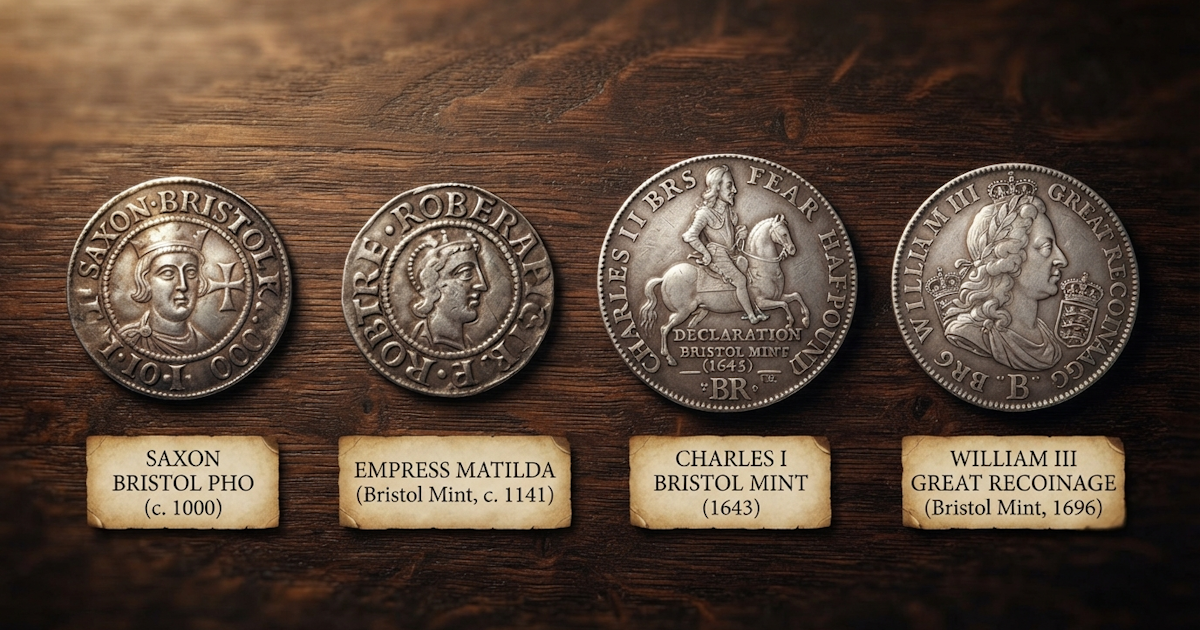
History Of The Bristol Mint
The History of the Bristol Mint is a chronicle of power, rebellion, and economic survival, stretching from the reign of Saxon kings to the chaotic frontlines of the English Civil War. For any history enthusiast visiting the city, understanding the legacy of Bristol’s coinage offers a unique window into how this port city shaped the […]
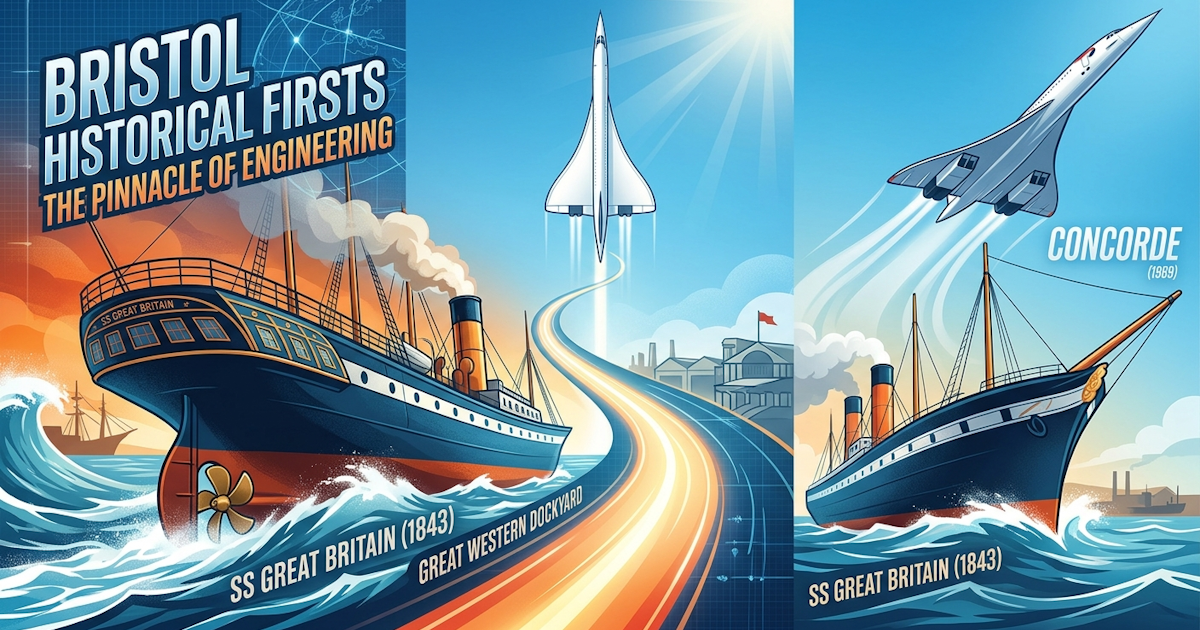
Bristol Historical Firsts: A Legacy Of Industrial And Cultural Innovation
Bristol Historical Firsts represent a legacy of restless ambition and engineering prowess that has defined this inland southwestern port city for centuries. This location has served as a crucible for ideas that changed the trajectory of global history, from the methods used to navigate the oceans to the very foundations of modern international commerce. Maritime […]