
Bristol Historical Firsts represent a legacy of restless ambition and engineering prowess that has defined this inland southwestern port city for centuries. This location has served as a crucible for ideas that changed the trajectory of global history, from the methods used to navigate the oceans to the very foundations of modern international commerce.
Maritime Pioneers And The SS Great Britain
Bristol Historical Firsts are most visible in the city’s relationship with the sea, a connection that helped transform global travel and exploration. The most striking monument to this maritime dominance is the SS Great Britain, a vessel that rendered all previous nautical designs obsolete upon its launch in 1843. Designed by Isambard Kingdom Brunel, it was the first ship to combine an iron hull with a screw-propelled steam engine, a marriage of technologies making it the fastest ship in the water, paving the way for the modern shipping industry. Brunel’s creation utilized wrought iron instead of wood, providing the strength needed for a larger hull. By choosing a screw propeller over paddle wheels, Brunel increased efficiency and speed, effectively ending the era of the traditional sailing ship for commercial use.
Beyond the physical ships, Bristol pioneered the structures of exploration itself. In 1497, the city established what is on some measures considered the first public-private partnership for exploration. King Henry VII entered into a collaborative agreement with Bristol merchants to finance John Cabot’s voyage to the New World. The voyage of the Matthew in 1497 was a calculated risk shared between the state and the merchant class. This Bristol Model of funding proved that exploration could be a sustainable business venture, providing the template for future global expansion. After expensive wars both domestic and abroad the Monarchy needed to spread the risk of exploration.
This decentralized approach stood in stark contrast to the state-monopoly models favored by the Iberian powers. In Spain, Christopher Columbus’s voyages relied on the direct patronage of Queen Isabella and King Ferdinand, with the crown maintaining tight bureaucratic control. Similarly, Portuguese expeditions, such as those led by Vasco da Gama, were state-driven enterprises where the monarchy acted as the sole proprietor. While these Iberian models relied on the absolute wealth of the throne, the Bristol Model leveraged the private capital and agility of the merchant class.
It was during this era that Richard Amerike, a prominent merchant and Sheriff of Bristol, became a key figure. Local research suggests a compelling theory that the continent of America was named after him rather than Amerigo Vespucci. The theory that Richard Amerike is the true namesake of the Americas rests on the timing of his investments and the phonetic similarity of his name. While debated, the theory remains a significant part of local lore, symbolizing the massive influence Bristolian merchants held during the Age of Discovery.
Physical reminders of these firsts:
- SS Great Britain: Great Western Dockyard, Gas Ferry Rd, Bristol BS1 6TY. Launched 1843.
- The Matthew (Cabot’s Ship replica): Princes Wharf, Wapping Rd, Bristol BS1 4RN. Original voyage 1497.
- Cabot Tower: Brandon Hill Park, Park St, Bristol BS1 5RR. Built 1897.
Hydrodynamic Engineering: Necessity Is The Mother Of Invention, Mastering The Floating Harbour
The creation of the Floating Harbour essentially turned a natural river into a giant “settling tank.” This forced Bristol to become a center for hydrodynamic engineering. The techniques developed here—combining mechanical scraping, bucket extraction, and high-pressure water sluicing—became a blueprint for managed ports around the world. Without these new technologies, the Floating Harbour would have become a meadow within a few decades of its completion.
One of the most significant inventions for the Floating Harbour was Brunel’s steam-powered Drag Boat (often called the BD6), launched in 1843. Instead of lifting mud out of the water, this boat used a massive, adjustable scraper blade at the stern. The boat would pull the blade along the harbour floor, scraping the silt toward the “Overfall” or the sluices at Underfall Yard. The scraper moved the mud into the path of moving water (the “scour”) created when the sluice gates were opened, allowing the mud to be washed out into the tidal River Avon naturally.
While the drag boat moved mud around, the harbour eventually required technology to remove it entirely, leading to the refinement of the Bucket Ladder Dredger in Bristol. These vessels used a continuous loop of iron buckets on a frame (the “ladder”) that lowered to the harbour floor. As the chain rotated, the buckets scooped up the silt, carried it to the top of the machine, and dumped it into “hopper barges” positioned alongside. This allowed for the deepening of specific berths and the removal of heavy clay that the drag boat couldn’t shift.
The technology of dredging in Bristol wasn’t just about boats; it was about the infrastructure of the harbour itself. To make dredging effective, engineers developed sophisticated sluicing systems at the Underfall Yard. They created a system of “scouring culverts”—underground tunnels that could release massive amounts of water at high pressure. This technology worked in tandem with the drag boats: the boat would scrape the mud near the tunnels, and the sluice would provide the “flush” to clear it away. Because the mud had to be moved several miles downstream to be dumped in the deep waters of the Severn Estuary, Bristol saw the development of specialized Steam Hoppers. These were among the first vessels designed with “bottom-opening doors,” allowing them to drop thousands of tons of dredged silt instantly once they reached the designated dumping grounds.
Heavy Industry: From The Shot Tower To The Bristol Industrial History
Bristol Historical Firsts extend into the heart of the United Kingdom’s industrial revolution. One of the most unique inventions to emerge was the world’s first purpose-built shot tower, conceived by William Watts in 1782. Before Watts, lead shot was manufactured in molds, a tedious process resulting in irregular shapes. Watts realized that if molten lead were dropped from a great height, surface tension would pull it into a perfect sphere before it solidified in water. He modified his house on Redcliffe Hill to test the theory, adding three stories and digging into the sandstone caves below. Watts’ invention was a masterpiece of practical physics. By creating a controlled environment for gravity to shape the lead, he ensured that every shot produced was identical, which was essential for the growing demand for precision in firearms. This invention revolutionized ammunition manufacturing globally.
The city’s industrial reach also included the birth of English brass manufacturing at Baptist-Mills. In the early 18th century, specialists were brought from Holland to establish a mill that produced high-quality brass goods. The establishment of the brass works at Baptist-Mills marked the first time the alloy was produced on a commercial scale in England. The site utilized the power of the River Frome and the expertise of Dutch craftsmen to create products exported around the globe. This industry was linked to the Guinea Trade, providing metalware traded along the West African coast.
This era also saw the development of the reverberatory furnace, or air furnace, which allowed for the smelting of metals using local pitcoal rather than expensive charcoal. The reverberatory furnace was a crucial step in the decoupling of industrial production from the supply of timber. Timber was running out and coal from Bristol’s coal seams was at hand. By separating the fuel from the ore reverberatory furnace solved the problem of the impurities in coal smoke reducing the quality of metals produced. Sir Clement Clerke is credited with pioneering the “Cupilo” (a type of reverberatory furnace) in the Bristol area. By 1687, he had established a lead smelting works at Hotwells, Bristol, which successfully used coal-fired reverberatory furnaces. The heat from the coal fire was “reverberated” (reflected) off the curved roof of the furnace down onto the metal. Bristol’s Brass industry adopted this technique helping make it renown for quality. By keeping coal smoke separate from the melting metal, Bristolian smiths produced higher-quality materials at a lower cost.
At a similar time John McAdam’s innovation in road building used graded stones and a binding surface to create durable, all-weather roads and paths. Later to be combined with coal tar Tarmacadam (Tarmac) was born. McAdam’s innovation fundamentally changed how Civil Engineers designed and executed road building. Remarks on the Present System of Road Making (1816) by John Loudon McAdam written during his tenure in Bristol became a global bible for civil engineering. Roads around Bristol were transformed into the best-drained and most durable highways in the country by John McAdam.
Innovation in the industrial use of furnaces was a theme in Bristol. Advancements in glass production were led by the Perrott family. In 1720, Benjamin Perrott secured a landmark patent for a redesigned furnace that addressed a critical industrial glass making bottleneck: the frequent and costly breakage of clay melting pots. By stabilizing the environment where the glass was fused, his design made large-scale production both more reliable and affordable. This spirit of refinement continued with his son, Humphrey Perrott, who in 1734 patented further improvements that anticipated the energy-saving demands of the early Industrial Revolution. His innovations included the use of artificial drafts to regulate furnace temperatures with precision and “mathematical racks” for the controlled annealing, or cooling, of window glass. These advancements were specifically engineered to reduce the consumption of local coal, cementing Bristol’s reputation as a pioneer in industrial efficiency and technical glass manufacturing.
Places and Facts:
- William Watts’ Shot Tower site: Redcliffe Hill. Modern replacement at Cheese Lane, BS2 0JJ.
- Baptist-Mills Brass Works: Baptist Mills, Bristol BS2. Established early 1700s.
- McAdam’s Tarmac Legacy: First applied to the Bristol Turnpike Trust roads circa 1816.
- The Prewett Street Glass Cone (The Only Surviving Structure). Prewett Street, Redcliffe, Bristol BS1 6NH, United Kingdom. The lower part of the cone has been preserved and cleverly converted into a restaurant (currently the Kiln Restaurant within the DoubleTree by Hilton hotel). Diners eat inside the original brickwork where glass was once annealed.
High Stakes and High Highs: Bristol Historical Firsts in Finance and Flight
Bristol Historical Firsts encompass the very way business is conducted and how people traverse the skies. In the Old City, outside the Exchange on Corn Street, stand four bronze pedestals known as the Nails. These pillars served as the site for the first standardized financial transactions in the city, giving rise to the English idiom pay on the nail. The four bronze Nails, dating from the late 16th and early 17th centuries, represent the city’s commitment to fair trade. By providing a public and permanent space for the exchange of currency, Bristol’s merchants established a level of commercial integrity. Merchants would settle their debts immediately by placing cash on these flat-topped pillars in front of witnesses, ensuring transparency and trust.
This tradition of fiscal innovation continued with the establishment of the Muscovy Company in 1555. This was the first English group to operate with a permanent capital base rather than funding one-off voyages. The creation of the Muscovy Company changed the nature of investment. By pooling resources into a permanent fund, investors could survive individual failed voyages and benefit from long-term growth. This structural shift was a precursor to the modern corporation and ideas leading to the creation of the Lloyds of London insurance industry.
The city’s flair for the groundbreaking reached new altitudes in the 20th century at Filton. This area became the cradle of the British aerospace industry and the birthplace of Concorde, the world’s first commercial supersonic jet. Concorde was more than just a plane; it was a symbol of what could be achieved through international cooperation and local expertise. Built at the Filton works (North Bristol), it represented the pinnacle of 20th-century achievement, marking an era in which Bristol led the world into the supersonic age. The aircraft was a marvel of Anglo-French engineering, capable of crossing the Atlantic in under three and a half hours. The project pushed the boundaries of aerodynamics and material science, proving that the city remained at the cutting edge of global technology. Today, Aerospace Bristol houses the final Concorde to ever fly. The presence of Concorde remains a testament to the city’s enduring spirit of reaching further and moving faster than the competition.
Fast Facts:
- The Nails: Outside The Exchange, Corn St, Bristol BS1 1JQ. Dates from the late 16th century.
- The Muscovy Company: Founded 1555.
- Aerospace Bristol (Concorde): Hayes Way, Patchway, Bristol BS34 5BZ. Concorde 216 first flew in 1979.
Bristol Historical Cultural, Civic, Culinary, and Scientific Firsts
Bristol Historical Firsts are found in the realms of sport, science, civic life, and common consumer goods.
The city is home to historically significant civic spaces. Brandon Hill is one of Bristol’s most iconic landmarks, located in the West End between Clifton and the city centre. Granted to the city in 1174, it is widely considered the oldest municipal open space in the country. Additionally, Bristol features Jacob’s Well, recognized as Britain’s only known medieval Jewish ritual bath (mikveh).
In 1906, James Peters made history at Ashton Gate as the first Black player to represent England in international rugby. Before reaching the national stage, he played 35 times for Bristol Rugby Club between 1900 and 1902. His presence on the field was a milestone for the sport, breaking racial barriers in professional arenas. James Peters’ journey from a local club to the international stage was a testament to his talent and resilience. Playing in an era of significant social hurdles, he became an inspiration for future generations of athletes. His skill as an outside half made him a pioneer whose legacy is celebrated by the club today, and his debut for England at Bristol’s Ashton Gate remains a landmark moment.
The city’s scientific and culinary contributions have left a mark on everyday life. Bristol was the home of Joseph Fry, who in 1756 began a chocolate dynasty that eventually produced the world’s first solid chocolate bar. This invention turned chocolate into an accessible treat for the masses. The Fry family’s innovations included industrial techniques that made mass production possible. Similarly, the blackcurrant drink Ribena was developed at the National Fruit and Cider Institute in Bristol as a way to provide children with Vitamin C during wartime rationing. The development of Ribena showed Bristol’s ability to apply scientific research to meet the nutritional needs of a nation during a period of crisis.
In the scientific world, Jacob Schweppe began selling the first bottled soda water in Dowry Square in 1812, while fossilist George Cumberland was the first to recognize the anatomical similarities between ichthyosaurs and modern porpoises in 1826. The work of George Cumberland and Jacob Schweppe illustrates the intellectual diversity of the city. Whether it was identifying prehistoric marine reptiles or inventing the commercial carbonated beverage industry, Bristol provided the environment for curious minds to thrive.
Fast Facts:
- Ashton Gate Stadium: Ashton Rd, Bristol BS3 2EJ. Site of James Peters’ England debut.
- J.S. Fry & Sons site: Union St, Bristol. First chocolate bar 1847.
- Dowry Square: Clifton, Bristol BS8 4SH. Jacob Schweppe’s first soda water sales in 1812.
Bristol is a city defined by innovation. Its firsts are not just footnotes but living parts of an identity that persists today. From the bronze nails of the Old City to the masts of the Great Western Dockyard, the city’s innovative soul remains accessible to all.
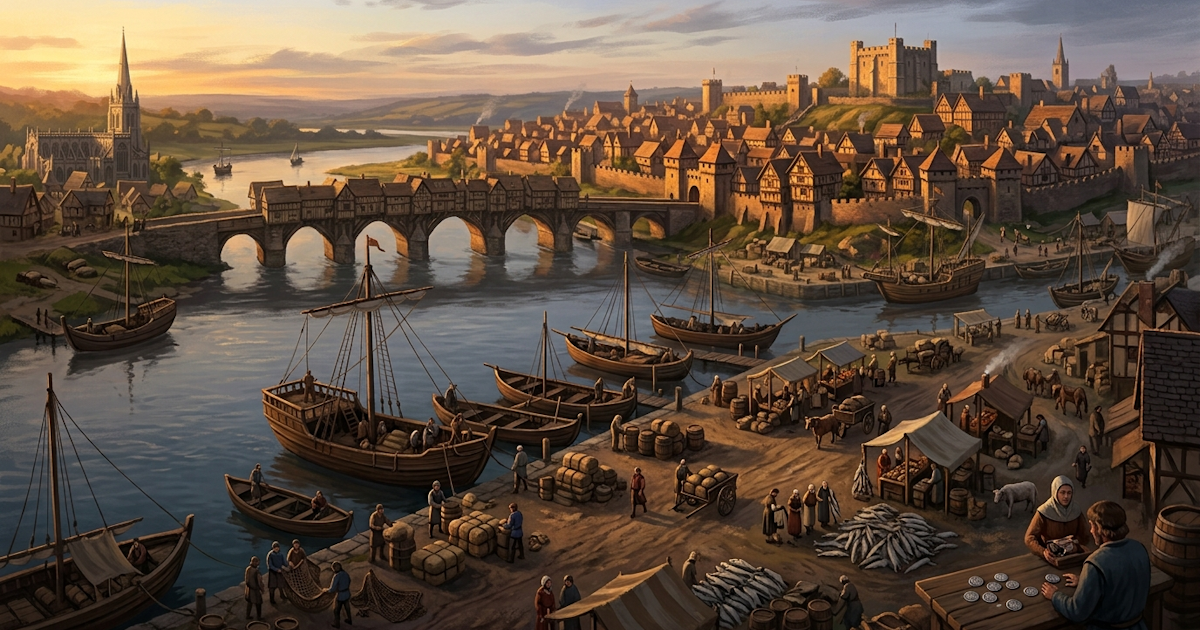
Bristol’s Origin Story
This concise history of Bristol explores how the city evolved from a strategic river crossing into a global maritime powerhouse and modern tech hub. By linking its geography to its industrial ambition, we can see how the “Place by the Bridge” shaped the world. From here you can link to explore certain aspects of Bristol’s […]
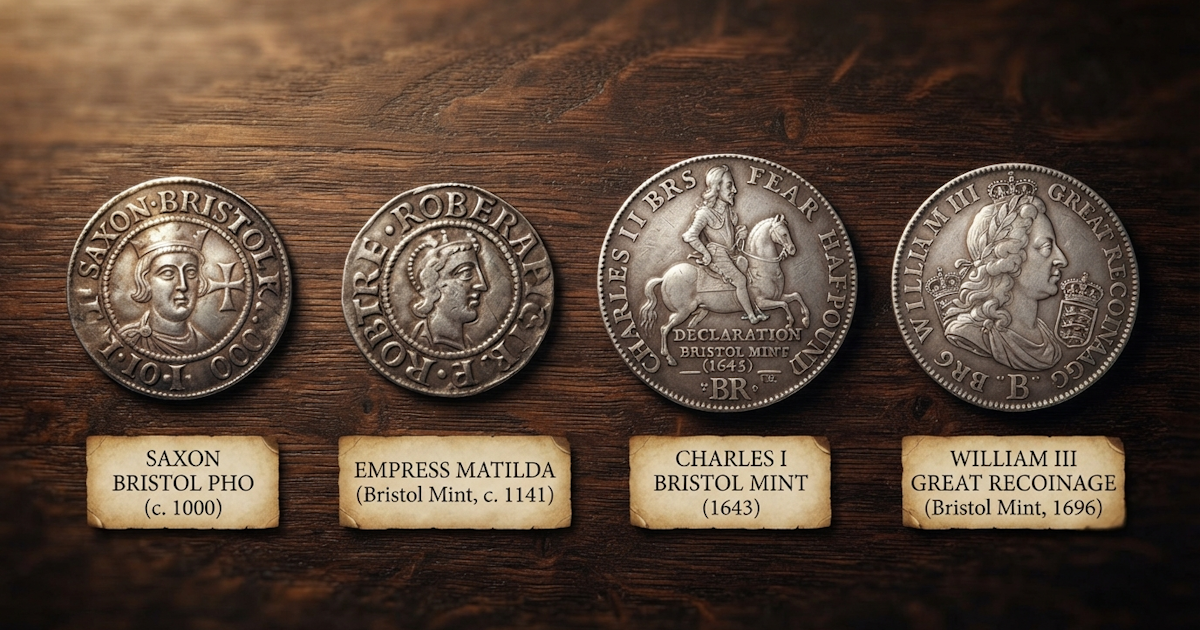
History Of The Bristol Mint
The History of the Bristol Mint is a chronicle of power, rebellion, and economic survival, stretching from the reign of Saxon kings to the chaotic frontlines of the English Civil War. For any history enthusiast visiting the city, understanding the legacy of Bristol’s coinage offers a unique window into how this port city shaped the […]

From Atlantis, to Bristol to the United States of America
Bristol played a vital role in the network of events that link the ancient world to what became the United States of America and Canada. The Platonic ideals and the Atlantis myth provide the “intellectual spark” that eventually found its way into the maritime and colonial ambitions of Bristol. Plato’s writings, specifically the dialogues Timaeus […]