Mastering how to make the perfect cup of coffee transforms a routine morning beverage into a cafe-quality kitchen ritual. Yes it does take more time but it is time well spent particularly when on a short trip away. Whether you begin with freshly roasted whole beans or high-quality ground coffee, coaxing out nuanced flavour notes demands attention to grind size, water temperature, and brew time. Across the globe, three domestic brewing staples hold pride of place on kitchen worktops: the classic moka pot, the modern drip filter machine, and the reliable cafetière. By understanding how extraction process interacts with each piece of apparatus, you can eliminate unwanted bitterness, elevate natural sweetness, pour a satisfying brew and relax.
The Grind
Regardless of the equipment used choosing the right grind profile is the easiest thing under your control, dictating how quickly water draws flavour and body from the bean. Grind size directly governs surface area: too fine, and water struggles to pass through, over-extracting the grounds and leaving behind a harsh, drying bitterness; too coarse, and water channels past without unlocking depth, yielding a thin, sour, and hollow cup. Dialling in your grinder to match your chosen method—from coarse, chunky sea salt flakes for immersion brewing in a cafetière, down through sandy medium particles for drip filters, to the fine table-salt consistency demanded by a moka pot—ensures a sweet, balanced extraction with every pour.
Medium to fine ground beans typical takes between 10 – 12 seconds in 2 to 3 second bursts of a electric blade grinder for an average single cup (15- 18g of beans). A gentle shake between pulses helps with consistency. If using a burr grinder grind for 5 – 10 seconds using the middle number on the machine’s scale again for 15-18g of beans. A hand grinder will take 35 to 50 seconds of continuous grinding. 15 to 18 grams of coffee beans makes 1 standard mug (or 1–2 smaller espresso-style cups).
Medium ground beans typically take between 8 to 10 seconds in 2 to 3 second bursts using an electric blade grinder for an average single cup (15–18g of beans). Shaking the grinder lightly between pulses ensures the particles resemble dry beach sand rather than uneven gravel. If using a burr grinder, select a true middle setting—roughly 14 to 16 on a standard 30-step dial—and grind for 5 to 8 seconds until the dose runs through. A manual hand grinder set to medium will require about 30 to 45 seconds of steady cranking.
Coarse ground beans typically take between 5 to 7 seconds in short, 1 to 2 second bursts using an electric blade grinder for an average single cup (15–18g of beans). A quick, deliberate shake between pulses is crucial here to prevent the blade from pulverising the bottom layer into dust while leaving large chunks up top. If using a burr grinder, choose a setting towards the upper end of the scale—typically 22 to 26 on a standard 30-step dial—and grind for roughly 4 to 6 seconds until the hopper clears. A manual hand grinder configured for coarse flakes will take about 25 to 35 seconds of turning.
Stovetop Brewing with a Hob Top Espresso Pot
The traditional hob top espresso pot, also known as a moka pot, produces a dense, rich extraction that closely approximates espresso without requiring commercial machinery. Originating in Italy during the 1930s, this octagonal aluminium or stainless steel brewer relies on gentle steam pressure to force bubbling water upward through a tightly packed bed of grounds. Because the water boils directly beneath the coffee chamber, thermal control is critical to prevent scalding the delicate aromatics and ending up with an astringent, burnt aftertaste.
Grind Consistency and Water Preparation
Achieve optimal extraction by selecting a medium-fine grind size, slightly coarser than commercial espresso powder but finer than standard filter coffee. If you use whole beans, a burr grinder prevents excessive fines that can slip past the filter screen and clog the safety valve. Pre-boil fresh water in a kettle before pouring it into the bottom reservoir up to just beneath the safety release valve. Starting with pre-heated water drastically reduces the amount of time the grounds spend sitting on a hot hob, shielding the delicate oils from scorching before extraction begins.
Managing Heat on the Hob
Assemble the pot using a kitchen towel to hold the hot base securely, screw the upper chamber tightly, and place it over low to medium heat on your stove. Leave the lid open so you can closely observe the flow. Within two to three minutes, coffee will emerge from the central spout in a smooth, hazelnut-coloured stream resembling warm honey. The moment the liquid turns pale amber and begins to sputter violently with steam bubbles, immediately lift the pot from the heat source and run the base briefly under cold tap water. This halts extraction instantly, preserving pleasant floral notes and leaving harsh compounds behind in the basket.
- Apparatus: Stainless steel or aluminium moka pot
- Grind size: Medium-fine (similar to fine table salt)
- Water ratio: Fill reservoir to the bottom edge of the safety valve
- Brewing time: 2 to 4 minutes over gentle heat
Drip Excellence with an Automatic Filter Coffee Machine
An electric filter coffee machine offers unparalleled consistency for household brewing, making it the premier choice for batch preparation and relaxed mornings. Water trickles evenly over an expansive bed of coffee, allowing gravity to slowly carry the brew down through a paper or metal mesh filter. When calibrated correctly, this gentle percolation produces a clean, luminous cup that highlights single-origin terroir or taste profile (how the coffee plant’s immediate environment like soil nourishment and climate affects the taste), delicate acidity, and bright citrus or berry characteristics that heavier methods tend to obscure.
Choosing Filters and Managing Ratios
Paper filters deliver the cleanest mouthfeel by trapping microscopic insoluble particulates and natural diterpenes such as cafestol. Rinse bleached or unbleached paper filters with hot water prior to adding coffee to flush out papery cardboard flavours and warm the funnel. A standard brewing ratio of 60 grams of coffee per litre of filtered water provides a balanced extraction window. For whole bean enthusiasts, a medium grind resembling coarse beach sand ensures water passes through the bed at a steady cadence, avoiding channeling or puddle formation.
Maximising the Flavour Arc
Many modern electric brewers include an automated pre-infusion stage, commonly known as the bloom. If your brewer lacks this automation, manually saturate the grounds with a small splash of hot water thirty seconds before letting the machine commence its full cycle. This pause releases carbon dioxide trapped within fresh roasts, allowing subsequent water to penetrate the cells of the bean evenly. Avoid leaving the brewed batch resting on the built-in hotplate for more than twenty minutes, as prolonged bottom heat oxidises organic compounds, transforming a crisp, aromatic pot into stale, muddy liquid.
- Apparatus: Electric drip brewer with thermal carafe or glass pot
- Grind size: Medium (coarse sand texture)
- Water ratio: 60 grams of coffee per 1,000 millilitres of water
- Brewing time: 4 to 6 minutes for a full carafe
Immersion Mastery with the Classic Cafetière
The cafetière, or French press, represents pure immersion brewing, delivering a full-bodied cup laden with natural oils and velvety texture. Unlike drip systems where water constantly filters through, immersion keeps coffee grounds and water in direct contact for the entire brew cycle. This prolonged infusion extracts deeper cocoa, nutty, and caramel notes, creating a comforting, weighty beverage that pairs exceptionally well with a splash of fresh milk or cream.
The Coarse Grind Approach
For cafetière brewing, grind consistency is paramount. Set your grinder to a coarse, chunky setting resembling sea salt crystals. Fine particles slip straight through the metal mesh disc, creating a gritty silt at the bottom of your mug and causing harsh over-extraction during long steep times. If you are using pre-ground coffee, seek out packages explicitly labelled for French press use, or adjust your brew time slightly shorter to accommodate finer particles.
The James Hoffmann Crust Technique
Add your grounds to the glass or metal beaker, pour in off-the-boil water at roughly 94 degrees Celsius, and stir thoroughly to ensure every particle is wet. Leave the plunger off and allow the slurry to steep undisturbed for four minutes. A dense crust of grounds will float to the surface. After four minutes, take two spoons to break the crust, allowing the vast majority of wet grounds to sink naturally to the bottom. Skim away remaining foam and floating chaff from the surface, seat the plunger gently just at the liquid level, and wait an additional three to five minutes before pouring smoothly without pressing down hard.
- Apparatus: 4-cup glass or stainless steel cafetière
- Grind size: Coarse (cracked peppercorns or rough sea salt)
- Water ratio: 32 grams of coffee per 500 millilitres of water
- Steep time: 4 minutes initial rest, plus 4 minutes post-crust settle
Selecting Between Whole Beans and Freshly Ground Coffee
The baseline quality of your morning cup depends heavily on the freshness and processing of the bean itself. Roasted coffee is a perishable agricultural product sensitive to oxygen, moisture, and light. Understanding the shelf stability and degradation timelines of whole versus ground coffee enables you to budget your purchases sensibly, avoid waste, and select beans roasted for your preferred preparation method.
Whole Bean Longevity, Flavour Preservation and the Wonders of Freshly Roasted Beans
Purchasing whole beans provides the longest window of peak flavour. The outer cellular structure of an intact bean shields volatile aromatic compounds and lipid oils from rapid oxidation. Whole beans peak roughly seven to twenty-one days post-roast, once excess carbon dioxide gas has dissipated, and maintain peak vibrancy for up to six weeks when stored in an airtight, opaque container in a cool pantry. Grinding whole beans immediately before brewing unlocks maximum aromatics and affords complete control over particle size adjustments.
Freshly roasted beans are heaven. A luxury that is preferable because roasting initiates a ticking clock on the delicate organic chemistry that gives coffee its vibrant character. During the roast, heat unlocks aromatic lipids and traps carbon dioxide gas within the bean’s cellular structure; once exposed to ambient air, these volatile compounds rapidly oxidise and evaporate. Stale, supermarket-shelf beans that have languished for months lose their origin notes—such as crisp fruit acidity, sweet caramel, or floral undertones—leaving behind a flat, woody, and predominantly bitter profile devoid of natural crema. Supermarket brands trick consumers by capturing the coffee aromas during processing the beans and inject it into the packaging before sealing. Have you noticed the intense aroma when first opening the bag but it quickly fades away.
Fresh beans enjoyed within their peak window (typically seven to thirty days post-roast) retain their rich aromatic oils and gentle degassing activity, resulting in a luminous, complex, and naturally sweet cup that stale beans simply cannot replicate. For visitors to Bristol Wogan Coffee Roasters at the bottom of the M32 in the city centre are highly recommended. To find out more check out this post.
Convenience and Handling of Ground Coffee
Quality ground coffee offers unmatched speed for early starts and eliminates the expense of purchasing an electric burr grinder. However, crushing the bean increases its exposed surface area by thousands of times, expediting the loss of aromatic compounds within minutes of opening the seal. To maintain peak freshness, purchase smaller 250-gram bags with one-way degassing valves, consume the contents within two weeks of opening, and store the container tightly sealed away from sunlight, heat, and refrigerator condensation.
- Storage container: Opaque vacuum canister or sealed foil bag with valve
- Optimal consumption window: 2 to 6 weeks post-roast for whole beans; 7 to 14 days for opened ground coffee
- Water quality: Soft, filtered tap water or mineral-balanced bottled water
- Ideal brewing water temperature: 91 to 96 degrees Celsius
Mastering home coffee preparation requires patience and a willingness to tweak brewing variables until you discover the balance that satisfies your personal palate. By tailoring your water temperature, choosing the correct grind profile, and handling each piece of equipment with precision, every mug you brew can rival the craft of an artisan coffee shop. Whether you favour the concentrated intensity of a stovetop moka pot, the crisp clarity of a drip filter, or the rich immersion of a classic cafetière, thoughtful preparation turns quality beans into an everyday luxury.
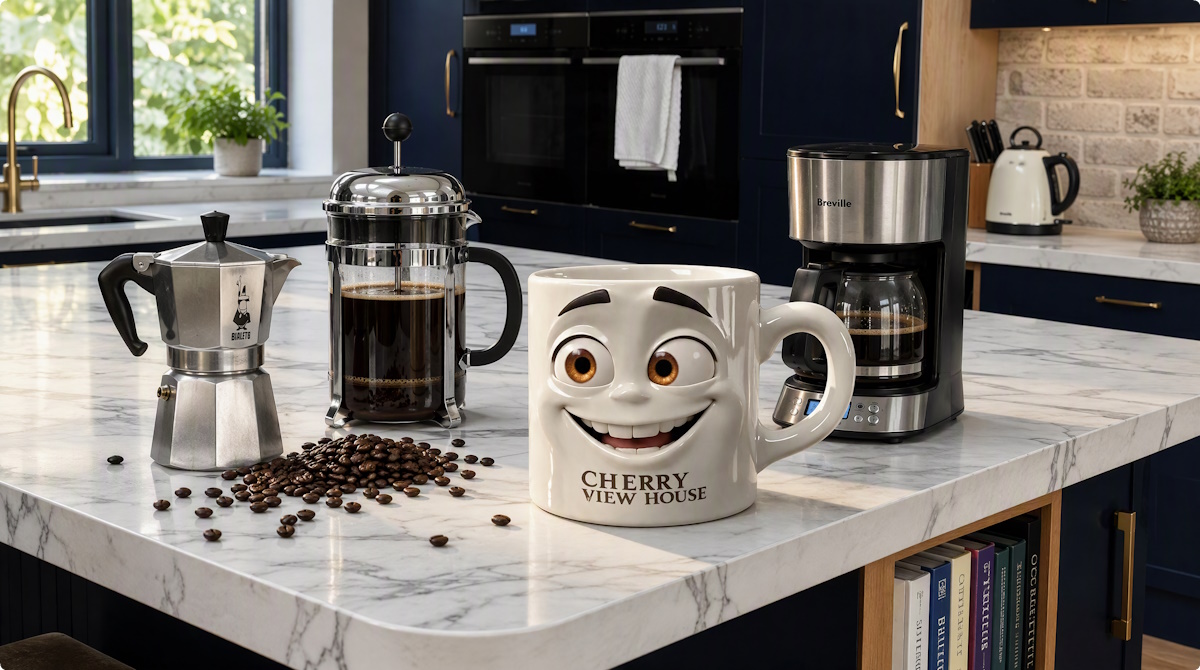
You may have noticed the character in the lead image above. That’s Mikey The Mug the coffee sommelier at Cherry View House in Bristol. Your home away from home for holidays, staycations, work strips, wedding accommodation and more: for best value self catering accommodation in Bristol.